Bedding & Bedroom Styling
Bed Skirt Length and Fabric: Details That Shape a Finished Bedroom
A bed skirt is a small piece of fabric with an outsized assignment: to finish the bed, soften its outline, and decide—quietly, but unmistakably—what the eye should notice beneath the mattress.
There are bedroom details that announce themselves, and there are details that make the room feel as though it has already introduced itself. A bed skirt belongs to the second group. It may conceal storage, cover a box spring, or simply provide a visual pause between the bed and the floor. Yet a skirt that is too short can look like an afterthought; one that drags can seem to have arrived before the vacuum cleaner. Its effect depends less on extravagance than on proportion.
That proportion begins with a measurement: the distance from the top of the bed’s foundation, or the point where the skirt will sit, to the floor. The number is useful, but it is not the whole story. A mattress, foundation, frame, floor covering, storage bins, and the weight of the textile all take part in the final silhouette. The best bed skirt length is therefore not a universal standard so much as a considered fit—one that accounts for the particular bed, the room around it, and the way the household uses the space.
Why the drop matters
The “drop” is the vertical distance a bed skirt must cover. In practice, that means measuring from the surface on which the skirt rests to the floor. On a conventional bed, that surface may be the box spring. On a platform bed, it may be a foundation or another part of the frame. The distinction matters: measuring from the mattress top can produce a figure several inches too large, while measuring from the floor to the visible edge of the frame may fail to account for where the skirt is actually attached or laid.
Begin by making the bed as it is normally used. Include the mattress, foundation if there is one, and any mattress topper that changes the height. Then identify the exact line where the skirt’s deck—the flat section beneath the mattress—will sit. Measure straight down from that line to the floor at several points: the corners, the sides, and the foot. Older floors are not always level; neither are all frames. A bed can look perfectly square and still reveal a small variation in the space beneath it.
Record the largest and smallest measurements. If they differ only slightly, a standard skirt may hang evenly enough, especially if the fabric is forgiving. If the difference is more pronounced, consider an adjustable design, a tailored construction, or a style that can be altered. The goal is not to force every edge into mathematical obedience. It is to prevent one side from hovering while another gathers against the floor.
A practical measuring routine
Before choosing a skirt, gather a measuring tape and note the following:
- Starting point: Identify where the skirt will rest, usually beneath the mattress or on the foundation.
- Floor distance: Measure vertically to the floor at the head, foot, and both sides.
- Frame details: Note rails, legs, platform edges, and any hardware that could interfere with a panel.
- Storage clearance: Measure the height of baskets or containers you intend to keep underneath.
- Fabric behavior: Consider whether the textile is light and fluid or heavy enough to settle into a deeper fold.
Write down the measurements rather than relying on memory. It is a modest precaution, but home purchases are full of small arithmetic errors masquerading as aesthetic decisions. If the bed has a footboard or side rails, check whether the skirt needs to pass behind or around them. A traditional wraparound skirt, a three-sided design, and a panel attached with fasteners can each behave differently on the same frame.
The right length: floor, clearance, or a deliberate gap
A skirt that meets the floor offers the most complete, conventional finish. It can conceal under-bed storage and create a continuous line around the bed. For this look, the hem should come close to the floor without being pressed into it. A little clearance helps the fabric hang freely and makes routine cleaning easier. If the hem catches under a vacuum or folds beneath storage containers, the skirt is probably too long for the way the room works.
A skirt that ends slightly above the floor can feel lighter, especially in a small room or where the bed has visible legs. This can be a useful compromise when a full-length hem would drag, or when the floor is uneven. The gap should look intentional and consistent. A barely perceptible difference can read as an elegant reveal; a large, irregular opening may look more like a sizing mistake.
Some bedrooms call for a more relaxed drape. A soft, fuller skirt may fall in gentle folds, lending a traditional or romantic quality. That effect depends on the fabric and construction as much as the drop. A crisp, tightly fitted panel will not suddenly become a generous ruffle because it has extra length. Conversely, a loose skirt can puddle where the floor is uneven. Choose the intended silhouette first, then look for the dimensions and fabric that can produce it.
Platform beds and visible frames
A bed skirt is not automatically necessary for every bed. Platform frames often have a finished rail or a low, deliberate profile, and covering that structure may obscure one of the bed’s defining features. A skirt can still be useful when storage needs to be hidden, but the decision should account for how the textile meets the frame. A panel tucked beneath the mattress may sit above the platform edge, while a skirt attached to the frame may fall from a different height altogether.
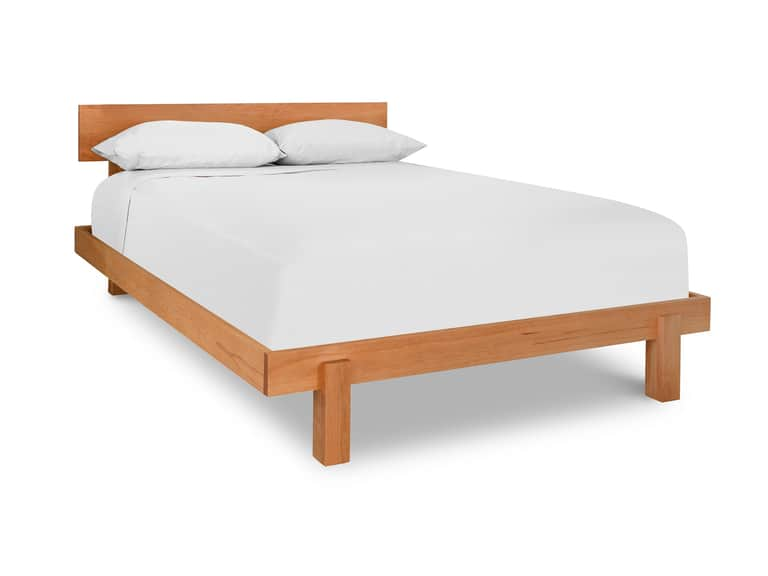
The frame itself can change the room’s visual balance. A low platform bed surrounded by a floor-length skirt may appear heavier than it is. A taller frame with an exposed base may look more settled when the skirt fills the vertical space beneath the mattress. If the frame has distinctive rails, legs, or joinery, consider whether hiding them improves the room or simply removes useful character. The Kipling Bed, for example, has a clean-lined platform form in solid hardwood; in a setting where the wood is part of the room’s visual interest, leaving the frame visible may be preferable to covering it.
Whatever the frame, check how the skirt will be held in place. A skirt that shifts every time the sheets are changed can become a recurring irritation. A nonslip deck, secure corner attachments, or a design made to fit the particular structure may help. The practical question is not only whether the skirt looks right on the first day, but whether it will remain aligned after ordinary use.
Fabric: the difference between a panel and a presence
Fabric determines whether a bed skirt appears crisp, relaxed, substantial, or almost invisible. Cotton is a versatile choice: it may be woven into a smooth, tailored panel or a more textured fabric with a casual hand. Linen and linen blends tend to bring a slightly irregular surface and a relaxed character, though the exact appearance depends on the weave and finishing. Polyester and blended fabrics can offer durability and predictable drape, while heavier textiles create a more pronounced line.
The word “plush” suggests softness, but softness is not the same as bulk. A plush fabric can add warmth to a room and make a skirt feel like part of the bedding rather than a hidden utility. Chenille, for instance, has a textured surface that catches light differently from a flat woven panel. The Gallop Claret Bed Skirt is described as chenille, with a soft, plush finish and a rich crimson tone. Such a texture can suit a layered, cozy bedroom, though its weight and color should be considered alongside the rest of the ensemble.
Lighter fabrics can be useful in warm climates or in rooms where a substantial hem would feel too heavy. They may, however, be more prone to shifting or revealing what is beneath them, particularly in strong daylight. A lined or slightly heavier panel can hang more steadily. Before choosing, think about the everyday conditions: sunlight, pets, children, frequent laundering, and whether the bed is regularly accessed from the sides. A skirt is decorative, but it is also in the path of ordinary life.
Color and coordination without matching everything
A bed skirt can coordinate with the bedding without matching it exactly. In fact, strict matching can sometimes make the bed look like a single upholstered block. A quiet contrast—warm gray beneath white, a muted earth tone with cream, or a deep color used sparingly—can give the arrangement definition. The useful question is whether the skirt belongs to the room’s palette, not whether it repeats the duvet’s shade to the last thread.
Color also changes how length is perceived. A skirt close to the floor in a shade similar to the rug may seem to merge with the room, while a strong contrast draws attention to the bed’s lower edge. A dark skirt may conceal shadow and storage, but it can visually anchor the bed. A light one may make the room feel airier, though it can show dust and scuffs more readily. There is no neutral choice in the absolute sense; even a pale, unobtrusive fabric has a relationship with the floor, walls, and bedding.
Earthy tones are especially adaptable when a bedroom already contains wood, woven materials, or other natural textures. The Hitchin’ Post Desert Bed Skirt uses a desert-inspired palette and subtle faux-leather accents, making it a distinctly styled option rather than a blank background. Its character is best considered in relation to the bed set and other furnishings. A strong motif or decorative detail works most successfully when the surrounding textiles give it room to breathe.
Tailored, gathered, or somewhere between
The cut of a bed skirt changes its mood. A tailored skirt has straight panels and a restrained profile. It suits rooms where clean lines matter, and it can be a natural partner for a modern platform frame. A gathered or pleated skirt introduces softness and a more traditional rhythm. Between these are designs with subtle folds, borders, or textured surfaces that provide detail without taking over.
The choice should reflect the room’s existing language. A skirt with deep ruffles may seem charming in a bedroom full of soft layers, but discordant beside a sharply minimal frame. A very crisp panel can feel formal where the rest of the room is relaxed. Consider the headboard, duvet, curtains, rug, and bedside furniture as parts of one composition. They need not be identical; they should simply seem to belong to the same conversation.
Construction matters as much as style. Look at the seams, hem, corners, and attachment points. A skirt with a generous, well-finished hem may hang more cleanly and withstand handling better than a thin panel with an unfinished edge. If the design includes a deck that sits under the mattress, check that the fabric is strong enough to support the panels without stretching. Where a skirt is frequently lifted for cleaning or storage access, secure seams are not a luxury detail.
Storage, cleaning, and the life beneath the bed
Concealing under-bed storage is one of the bed skirt’s most persuasive practical uses. Before committing to a floor-length design, measure the containers themselves. A skirt that brushes the floor may conceal them well but make them difficult to pull out. If access is frequent, a slightly shorter drop, a split corner, or a three-sided skirt may be more useful. The bed should not become a well-dressed obstacle.
Leave enough room for air circulation and routine cleaning. Fabric that rests against the floor can collect dust, especially in a high-traffic room or near a vent. A hem with a small clearance may make cleaning simpler, while a removable skirt allows more thorough laundering. Always check care instructions before purchase: some textiles are machine washable, while others require more careful treatment. Colorfastness matters when the skirt sits near pale flooring or bedding, particularly if it will be washed often.
The space under a bed is also a small climate of its own. Dust gathers there; objects disappear there; a forgotten box can become permanent through sheer inertia. A skirt can make that space look calmer, but it does not remove the need to clean it. If the skirt is difficult to lift or reattach, the room may become tidy in appearance while growing less tidy in fact. A good design should make maintenance possible, not merely conceal its absence.
Common fit problems—and how to avoid them
The most common mistake is ordering by bed size alone. “Queen” or “king” describes the intended footprint, not necessarily the vertical drop. Two beds of the same nominal size can sit at different heights because of their frames, foundations, mattresses, and toppers. Confirm both the width and length requirements and the actual drop before buying.
Another frequent problem is assuming that extra length will solve everything. Too much fabric may bunch against the floor, obscure a frame, or catch under storage bins. Too little leaves a conspicuous gap and may expose the foundation or stored items. If the measurement falls between standard options, look for adjustable attachment points or ask whether the hem can be altered. A modest adjustment can be more successful than trying to disguise an ill-fitting skirt with extra bedding.
Finally, do not judge the fabric from a color name alone. “Sage,” “sand,” and “claret” suggest a family of tones, not a guaranteed match. Nearby materials can make the same color appear warmer, cooler, darker, or more muted. Compare the skirt with the bedding in the room’s actual light, preferably alongside the rug and wood finishes. The bedroom is not a catalog page; its colors change over the course of a day.
A small decision with a lasting effect
Choosing a bed skirt is a matter of proportion, texture, and use. Measure the drop from the correct point. Account for the floor, the frame, and the storage that must pass beneath it. Then decide what the fabric should do: disappear, soften, add color, or contribute a distinct texture. When those practical and visual questions are answered together, the skirt becomes less an accessory chosen at the end and more a considered part of the room.
A finished bedroom does not require every surface to be dressed. Sometimes the frame should remain visible; sometimes the space beneath it should be concealed. The useful distinction is intention. A skirt that fits the bed, clears the floor, and speaks gently to the surrounding textiles can make the whole arrangement feel settled. It is a modest accomplishment, though bedrooms are made, more often than we admit, from modest accomplishments repeated until the room feels like home.
Quick checklist before you choose
- Measure from the skirt’s actual resting point to the floor, not from the top of the mattress.
- Check the drop at several points to account for uneven floors or frame differences.
- Decide whether the hem should meet the floor, leave a small gap, or fall in a relaxed drape.
- Consider platform rails, legs, footboards, and how the skirt will attach and stay in place.
- Measure storage containers and allow room for access, airflow, and cleaning.
- Choose fabric weight, texture, color, and care requirements in relation to the room’s existing bedding.
- Look beyond nominal bed size: confirm the panel dimensions and the skirt’s drop before ordering.