Bedding · Materials & care
Mulberry Silk Mattress Toppers: Fill, Feel, and Care
A silk mattress topper is less a renovation than a change in the room’s smallest weather system: the few inches between a sleeper and a mattress. Its appeal lies in a soft, comparatively light layer, but the words mulberry silk tell only part of the story. Fill, stitching, cover fabric, fit, and care determine what the topper is actually like to live with.
Published November 12, 2026
Mattress toppers are often described as solutions. A mattress feels too firm; a topper is summoned. A mattress has grown lumpy or lost its support; a topper is asked to intervene. But a topper is not a mattress in miniature, and it cannot reliably repair a failing sleep surface. It is better understood as a layer with a particular job: to alter the immediate feel of a mattress, sometimes subtly, sometimes decisively.
Mulberry silk mattress toppers occupy a more restrained corner of that conversation. Depending on their construction, they may add a smooth, lightly cushioned surface without the deep, springy loft associated with some featherbeds or thick foam toppers. That distinction can be appealing to sleepers who want to soften the contact surface but do not want to feel as though they have added a second mattress.
Still, “silk” is not a complete specification. The term can refer to the fiber used in the filling, the outer fabric, or both. Two products bearing the same headline description may differ in fill quantity, stitching pattern, thickness, and care instructions. Before choosing one, it helps to look beyond the romance of the fiber and ask how the topper is made, what change it is meant to create, and how much maintenance it demands.
What “mulberry silk” means
Mulberry silk is produced by silkworms raised on a diet of mulberry leaves. In bedding, it is valued for its fine, smooth fibers and soft hand. Those qualities may make a silk-filled layer feel gentle and light, particularly beside toppers built around denser foam or more resilient, bulky fills.
The name, however, does not tell you how the silk is arranged inside a mattress topper. Silk may be laid in sheets or batting, held within stitched compartments, or used as one element in a layered construction. The finished feel depends on those details as much as on the fiber’s origin. Fill weight, fiber length, layering, and quilting all influence whether a topper feels nearly flat, softly padded, or more substantial.
Nor does a natural fiber guarantee a particular sleep temperature. Silk is commonly described as breathable and comfortable across changing conditions, but the experience depends on the complete bedding system: the mattress, the topper’s cover, the sheets above it, the room, and the sleeper. A light silk layer may feel less bulky than a thick, heat-retentive material, yet it should not be mistaken for active temperature control or a substitute for choosing suitable bedding.
There is also a useful distinction between silk fill and silk fabric. A topper can have silk in its filling and a cotton cover; another silk product may refer primarily to a silk surface. Ask the maker to identify the materials separately. If the description does not clearly say what is in the fill and what forms the cover, it is difficult to compare products on meaningful terms.
The feel: softening without a dramatic reset
When people shop for a topper, they are often trying to describe a feeling they have not yet found a precise word for: the mattress is supportive, perhaps, but too abrupt; comfortable, but somehow unwelcoming; fine at first and less so by morning. A thin, soft layer can make the surface feel more yielding. It may reduce the immediate impression of firmness, but the effect is not the same as replacing a mattress or correcting its underlying support.
Silk toppers tend to interest those looking for a relatively light change. A foam topper can contour closely and create a pronounced sense of cushioning; a lofty featherbed can give the surface a buoyant, billowy quality. Silk constructions vary, but many are chosen for a gentler adjustment rather than a dramatic transformation. If you want several inches of pressure-relieving material, a thin silk layer may leave you wondering where the promised change went.
Thickness alone is not a dependable guide. A topper’s measured depth may not tell you how it compresses under body weight, and manufacturers do not always use a common standard for describing loft. Look for specific details about fill amount, construction, and intended feel. If a maker provides no thickness or fill information, contact them before assuming that the product will solve a particular comfort problem.
It is wise to consider the mattress beneath it. A topper can make a sound but overly firm mattress feel more forgiving. It cannot restore a sagging centre, straighten a damaged support system, or make an uneven mattress uniform. In those cases, extra cushioning may disguise the problem briefly rather than address it. The more pronounced the defect, the less sensible it is to expect a thin layer to act as an elegant alibi.
Sleep position can inform expectations, though it cannot settle the matter by itself. Side sleepers may want enough cushioning to ease pressure at the shoulders and hips; back and stomach sleepers may prefer a surface that feels less enveloping. Body shape, mattress firmness, and personal preference complicate all these generalizations. If possible, check a seller’s return terms and try the topper over the mattress it will actually be used with.
Construction: the details hidden under the sheet
A topper has several parts, each with a practical consequence. The fill shapes its loft and hand. The shell contains the fill and may affect breathability and surface feel. Stitching helps control movement, though the degree of control varies by design. A skirt, straps, or corner elastics may help hold the topper in position, while a simple flat design depends more on friction and the weight of the bedding above it.
Quilting is more than decoration. Stitch lines or compartments can help keep filling distributed across the surface, but they also determine how the topper flexes and where it may compress. A closely quilted construction can feel flatter or firmer than a looser, more generously filled one. This is not a rule that replaces product information; it is a reason to seek that information.
Check whether the topper is designed for a particular mattress size and depth. Measure the mattress rather than relying only on its label, especially if it is unusually deep or already has a pillow top. Consider how the added layer affects fitted sheets: a topper that seems modest on its own may make a shallow-pocket sheet pull loose. A secure fit matters not merely for tidiness but for a smooth sleeping surface.
Ask about the cover as well as the filling. Cotton is common in bedding shells, but weave and finish affect touch and durability. If the topper has a separate removable cover, find out whether that cover can be washed and whether the silk core itself must stay dry. “Removable” and “machine washable” are not interchangeable promises; one describes a design feature, the other a care permission that should be stated by the manufacturer.
Silk compared with other mattress topper materials
Material comparisons are most useful when framed around the change you want, not a contest in which one fiber must win. A silk mattress topper, a wool layer, a featherbed, and a foam topper do not produce identical sensations, and their practical demands differ.
- Silk: Often selected for a soft, lightweight layer. Its effect can be subtle, and the exact feel depends heavily on fill quantity and construction. Care may be delicate or restricted.
- Wool: Can offer a resilient, cushioned surface and is valued by many for moisture management. Wool products vary in density and warmth, and some require careful laundering or professional cleaning.
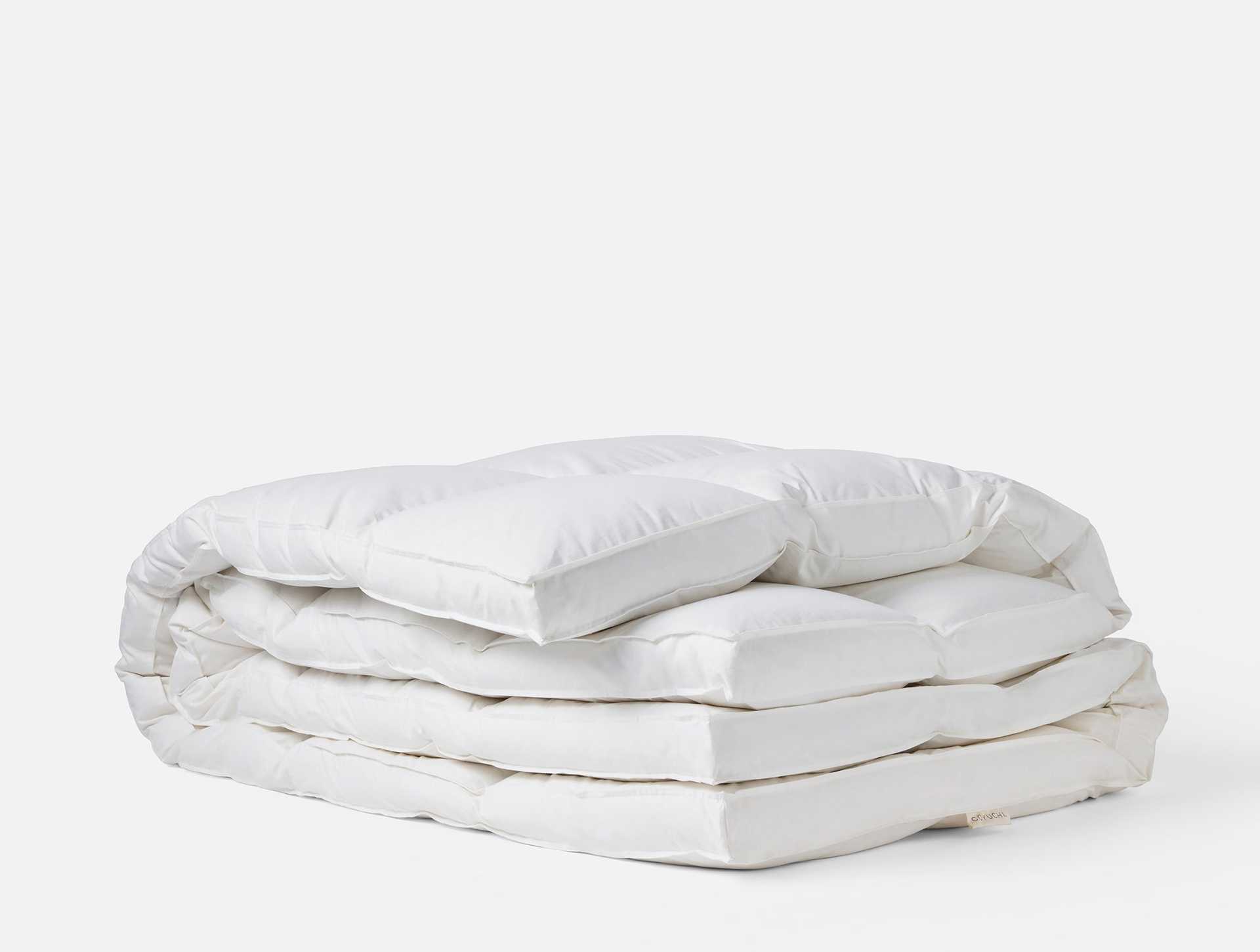
- Feather and down: Often create a loftier, more yielding surface. A baffle-box design can help distribute fill, but the feel, maintenance, and sourcing details differ by product. For example, the [Down Featherbed](/products/down-featherbed-5709) uses an organic cotton shell and a fill of 75 percent feather and 25 percent down; its care guidance calls for spot cleaning and recommends professional laundering when full cleaning is needed.
- Foam: Available in many densities and thicknesses, with a more pronounced contouring effect in some constructions. Foam can change the mattress feel substantially, though the experience depends on formulation, thickness, and the sleeper.
These are broad categories, not guarantees. A thin wool layer may feel less lofty than a thick silk construction; a low-profile foam pad may alter the surface less than a heavily filled featherbed. The useful comparison is between the actual specifications and the effect you want. If pressure relief is the priority, investigate how much cushioning the topper provides. If the aim is a softer surface with minimal added height, a lighter design may be more appropriate.
Material labels can also obscure mixed construction. A product described as silk-filled may include other fibers or use a blend. Read the full materials list, not just the product name. For anyone with sensitivities or specific sourcing concerns, ask for clear disclosures and rely on the manufacturer’s documented information rather than assuming that “natural” means uniform, hypoallergenic, or suitable for every sleeper.
Choosing a topper with clear expectations
A useful comparison begins with a simple inventory of the bed as it is now. Is the mattress structurally sound? Is it too firm, or is it sagging? Does the discomfort come from the surface feel, from inadequate support, or from an unrelated factor such as temperature, pillow height, or a sheet that shifts? A topper can only address a limited part of that picture.
Next, decide how much change you want. If you want a pronounced cushion, look for explicit information about loft and fill rather than assuming that silk will deliver it. If you prefer to preserve the character of your mattress while making its surface a little gentler, a lighter topper may suit that intention. The phrase “without substantially changing the feel” is an appealing promise, but it is not a universal property of silk; the design determines how noticeable the layer will be.
Then compare the practical terms. Check the topper’s dimensions, thickness, materials, attachment method, warranty, return period, and cleaning instructions. Ask whether the fill is all silk or blended, whether the cover is removable, and whether the stated care routine applies to the whole item or only its cover. If the manufacturer cannot answer basic questions about cleaning and construction, proceed cautiously.
Price alone is an unreliable shortcut. Silk is a premium fiber, but a higher price does not by itself establish that a topper has the right amount of fill, a durable shell, or a comfortable design for your mattress. A clear specification is more useful than a dramatic adjective. Compare like with like: size, fill weight, shell material, construction, and care requirements.
Caring for a silk mattress topper
Care begins before the first night. Read the product label and any instructions supplied by the maker. Silk-filled bedding does not have one universal cleaning method, and a washing instruction that applies to a silk pillow cover may be entirely wrong for a large, filled topper. Water, agitation, heat, and unsuitable detergent can damage fibers or distort the filling. When the instructions are unclear, ask before cleaning.
Many toppers benefit from a protective layer above them. A properly fitted mattress protector or suitable cover can limit exposure to sweat, body oils, spills, and dust, reducing the need to clean the topper itself. Confirm that the protective layer is compatible with the topper and does not create a slippery or overly warm surface. Regularly laundering the cover, when its instructions allow, is usually easier than attempting to wash a bulky filled item.
For routine freshness, follow the manufacturer’s advice about airing. If airing is permitted, allow the topper to breathe in a clean, dry place and avoid prolonged exposure to harsh direct sunlight unless the maker explicitly recommends it. Silk is a protein fiber and can be vulnerable to heat and light; the safest procedure is the one specified for the actual product. Do not assume that every topper can be shaken, folded tightly, vacuumed, or placed in a dryer.
Address spills promptly but gently. Blot rather than scrub, and do not soak the filling unless the care label directs you to do so. A mild-looking stain can still penetrate deep into a topper, where moisture may linger. If cleaning requires more than the approved spot-care method, consult the manufacturer or a professional cleaner who is prepared to handle the stated materials.
Storage deserves the same restraint. Make sure the topper is completely dry before putting it away, and store it in a clean, breathable bag or cover in a dry location. Avoid compressing it for long periods unless the manufacturer says that compression is acceptable. Moisture trapped in a folded textile is a less charming kind of softness, and one better prevented.
Common assumptions worth setting aside
One is that a silk topper will make any mattress cooler. Breathability may contribute to a comfortable surface, but perceived temperature depends on the entire bed and the room. A waterproof protector, dense blanket, warm mattress, and high indoor temperature can outweigh the influence of a lightweight topper. If you sleep hot, consider every layer, not only the one with the most persuasive material name.
Another is that natural means effortless. Silk is a natural fiber, but a filled topper can still need careful handling. Natural materials are not automatically washable, stain-resistant, or appropriate for every allergy or sensitivity. Check the product’s certifications and claims, and distinguish documented testing from broad promotional language.
Finally, a topper is not a maintenance-free way to extend the life of a worn-out mattress. It can protect the surface when used with suitable bedding, and it may improve the feel of a mattress that remains in good condition. It cannot reverse damage to the support beneath it. If the mattress dips or the discomfort is persistent, investigate the underlying cause before adding another layer.
A short checklist before buying
- Confirm whether silk refers to the filling, the cover, or both.
- Look for fill weight, dimensions, thickness, and a description of the construction.
- Decide whether you want a subtle surface change or substantial cushioning.
- Measure the mattress and check that fitted sheets will accommodate the added height.
- Read care instructions for the entire topper, not just a removable cover.
- Check attachment details, return terms, and any sourcing or certification information relevant to you.
- Make sure the mattress itself is in sound condition; a topper cannot repair sagging support.
The quiet virtue of the right layer
A mulberry silk mattress topper is best considered as a considered adjustment, not a miracle cure. Its appeal is the possibility of a softer, lighter-feeling surface that does not overwhelm the mattress underneath. Whether it achieves that depends less on the name on the label than on the amount and arrangement of the fill, the cover, the stitching, and the fit.
Start with the mattress you own and the change you actually want. Compare construction details, take care instructions seriously, and resist claims that promise more than a layer can reasonably deliver. The right topper may be almost unremarkable in use: a modest alteration to the bed’s surface, noticed mainly because the bed feels more like the one you meant to have.